
Carroll Parole and Probation Differences
A person can live in Carroll County under several forms of community control. They are not interchangeable. The Maryland Division of Parole and Probation, or DPP, supervises parole, mandatory release, and court-ordered probation. The Maryland Parole Commission, or MPC, makes parole-suitability decisions and handles certain revocation and release matters. A judge, not MPC, imposes probation.
Parole is conditional release during a prison sentence after MPC action. Mandatory release results from the sentence calculation after allowed diminution credits, commonly called earned or good-time credits. The person remains under mandatory supervision for the rest of the term. Probation is part of a court sentence. It may follow incarceration, go with suspended time, or begin without a prison stay. Each status can include rules and reporting duties, but its legal source differs.
| Status | Who creates it | Who supervises | Best first record |
|---|---|---|---|
| Parole | Maryland Parole Commission | Maryland DPP | MPC decision and DPP office |
| Mandatory release | Statutory sentence calculation | Maryland DPP | DPSCS release record |
| Probation | District or Circuit Court judge | Maryland DPP | Sentencing docket and order |
| Pretrial monitoring | Court order while a case is pending | Carroll Pretrial Services | Bond order and court docket |
- Discharge
- The formal end of the sentence or supervision term.
- Absconder
- A supervised person alleged to have stopped reporting or left supervision without permission.
- Revocation
- An official action that ends or changes conditional release after a violation finding.
- Detainer
- A request or hold from another authority that may prevent community release.
Verify Carroll Post-Release Supervision
Maryland does not publish a statewide person-name search for every parolee or probationer. A missing name in the public DPSCS incarcerated-person locator does not answer the supervision question because that locator is aimed at people in a correctional facility. An old report or the mere existence of a criminal case is also not enough. Use the sentencing record and the correct field office together.
- Identify the case in Maryland Judiciary Case Search. Match the court, case number, charges, dates, and other non-sensitive facts instead of relying on a name alone.
- Read the disposition and sentence. Look for probation, suspended time, incarceration, credit for time served, or a later violation entry. A closed case label does not mean supervision ended.
- For a state-prison release, check the commitment and release path through DPSCS. A former prisoner may no longer appear in the current-custody locator, so historical release data may require a DPSCS records request.
- Contact the Westminster DPP field office. Ask whether it is the right reporting office or whether public supervision status can be confirmed. Supply a case or DOC number if known.
- For parole, consult MPC hearing and decision channels. For pretrial release, use the court order and Carroll Pretrial Services rather than DPP or MPC.
- Resolve conflicting dates with the originating office. A court order, physical jail release, and the start of field supervision can have different timestamps.
The full custody and court-record sequence for a named person is available through the Carroll County released-inmate search path. That broader check helps determine whether DPP, CCDC, DPSCS, or a court owns the next record.
Carroll Probation and Parole Office
The official DPP directory assigns Carroll County to the Westminster Field Office. Staff may be able to identify the correct reporting office or disclose a public supervision status, but identity, safety, and confidentiality rules can limit an answer. Give a full name plus a case or DOC number when available. Ask a narrow question, such as whether the Westminster office is the proper contact, rather than requesting a broad personal file.
Westminster Field Office
Carroll County Courthouse Annex
101 North Court Street, Ground Floor
Westminster, MD 21157
410-871-3650
Fax: 410-871-3670
The directory is the official source for office assignment and current contact details. It does not function as a searchable list of supervised people. When a supervision record is not public by phone, the sentencing docket still identifies court-ordered probation, and an available DPSCS record may document parole or mandatory-release status.
The DPP directory page shows the Carroll office in its statewide context.
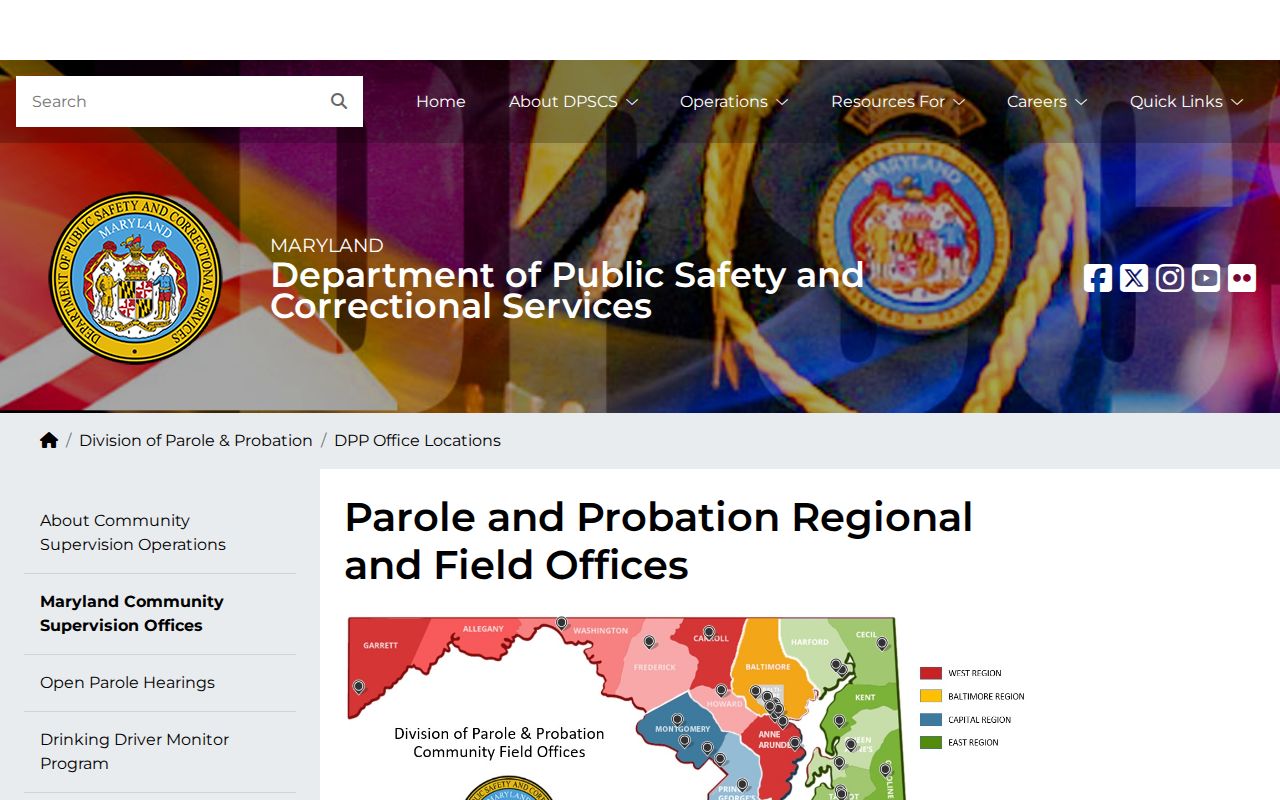
The captured directory is useful for routing an inquiry, but it should not be read as proof of any individual’s supervision status.
Note: Verify directory details before a visit because the research did not establish public walk-in hours for the Westminster office.
Carroll Release Agency Roles
Three agencies commonly appear in Carroll County release questions. DPP manages field supervision after parole, mandatory release, or a probation order. MPC decides whether an eligible incarcerated person is suitable for parole and handles specified release and revocation matters. Carroll County Pretrial Services monitors some defendants released on bail while their cases are still pending.
Pretrial Services works from 37 South Cranberry Road, Suite A-1, in Westminster. The Sheriff describes testing, electronic monitoring, and other judge-set conditions. That is release from secure jail custody, but it is not parole, a prison discharge, or completion of the criminal case. A person can therefore be outside the detention center while still under Sheriff-administered monitoring.
For a status label, follow its source. A bail order and pending case point to Pretrial Services. A sentencing entry ordering probation points to DPP. A prison release approved by MPC points to parole and DPP. A DPSCS sentence calculation can produce mandatory release without an MPC parole approval. These distinctions prevent a court record, jail movement, and supervision record from being blended into one unsupported conclusion.
Carroll Parole Hearing Records
The Maryland Parole Commission decides parole suitability for eligible people serving six months or more in state or local facilities. Hearings may occur by video or at an institution. Public MPC meetings are listed every other Wednesday at 9:30 a.m. in Baltimore, and agendas are posted no later than 24 hours before a meeting. A meeting may close in whole or part under Maryland General Provisions § 3-305.
The 2026 open-parole-hearing master list covers qualifying open hearings. It is not a calendar of every hearing. County detention-center open hearings occur at the county facility, while state cases occur at designated institutions, subject to authorization, security, and available space.
MPC describes three main results: parole may be refused with no further hearing, rehearing may be set for a future time, or parole release may be approved. Approval is not proof of release that day. Preconditions and release planning must be completed. A rule violation or failed condition can suspend approval or lead to another hearing.
No official public name-searchable database of individual Maryland parole decisions was found. Annual meeting minutes concern Commission governance, not a person-result index. Institutional Parole Associates serve decisions on incarcerated people, and registered victims receive specified notices. Others may contact MPC, request an available record, check DPP supervision, and obtain the facility’s release record.
Maryland Parole Commission
6776 Reisterstown Road, Suite 302
Baltimore, MD 21215
410-585-3200 or 877-241-5428
The official MPC overview explains the Commission’s distinct decision role.
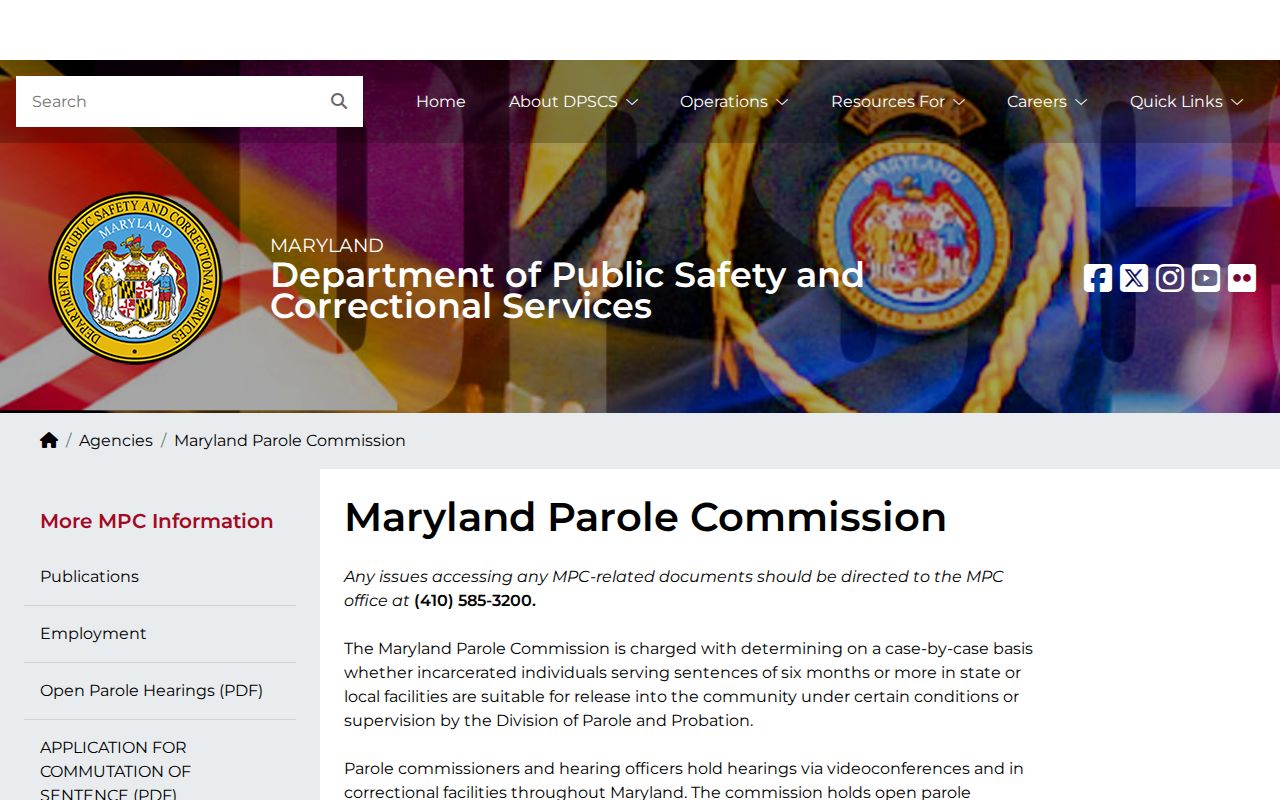
This Commission source complements the DPP office directory. It does not replace the actual release record or prove that a person left custody.
Carroll Supervision Violations and Warrants
Supervision conditions vary by the court order, parole decision, and individual plan. At a high level, they can require reporting, compliance with lawful instructions, and completion of treatment or monitoring terms. An alleged violation does not itself prove revocation. The court or Commission process determines the legal result, while a warrant or detainer can affect whether a planned release occurs.
No official Carroll Sheriff or Maryland DPP public name-searchable absconder list was located. An absconder is generally a person alleged to have stopped reporting or left supervision without permission. A violation warrant can mean the person is wanted, but it does not show present custody. Case Search may contain a warrant-related docket entry, although some remote details are limited. Confirm the entry with the issuing court or responsible agency.
Maryland VINE can provide registered users with certain custody and supervision events. Carroll Sheriff materials describe notices that may include supervising-agent changes, hearing violations, hearings, court status, release, escape, and transfer. VINE is an alert source rather than a permanent certified supervision file, so the DPP, MPC, court, or custodian remains the source for final verification.
Carroll Release and Reentry Continuum
Carroll County’s corrections continuum makes physical location a poor shortcut for legal status. The Sheriff describes work release, electronic monitoring or home detention, and temporary treatment placements. Participants can remain in Sheriff custody while outside the secure building. Someone who is not in a cell may therefore still be in custody rather than fully released to parole or probation.
The Carroll County Health Department Re-Entry Services program is a separate local support layer connected with CCDC. Case management can help address needs tied to a return to the community. Participation in reentry support does not establish parole, probation, or discharge. Legal status still comes from the court, DPP, MPC, Sheriff, or DPSCS record.
This local mix also explains why two records may both be accurate. A CCDC movement may show that a person left the secure unit, while a program record reflects continued placement or monitoring. The court docket may show pretrial conditions, and DPP may have no role. Asking which agency retains authority is more useful than asking only whether the person is physically inside the jail.
Note: Work release, treatment placement, and home detention require agency-specific confirmation because none alone establishes a full Carroll County discharge.
Carroll Supervision Discharge Records
Supervision ends through the legal process tied to that status. Probation ends under the court’s sentence and any later order. Parole and mandatory supervision end under the sentence, Commission action, and DPSCS records. A discharge means the supervision term has formally ended. It should not be inferred from silence in a locator or from a missed public record.
For probation, review the sentence and later docket entries. Obtain a certified disposition or order from the Carroll clerk if the exact end point matters. For parole or mandatory release, ask DPP or DPSCS for the available record, using the person’s DOC number, institution, case, and approximate dates. MPC records can explain a parole decision, while the releasing prison’s custody record establishes the actual movement.
Maryland Correctional Services § 7-501 and following provisions govern mandatory supervision. Parole eligibility is controlled by § 7-301 and depends on the offense date, sentence, and statutory category. Eligibility is not an order to release. Likewise, the end of supervision does not alter the separate court or booking record unless sealing, expungement, or another legal rule applies.
Note: A supervision discharge should be confirmed through the agency or court record that formally ended that specific Carroll County status.