
Carroll Court Holding Release Outcomes
The Carroll County Sheriff’s Court Security Unit transports prisoners between correctional facilities and courthouse holding areas. These secure rooms support court appearances. They are not long-term correctional facilities, separate booking centers, or places with a standalone public release list.
A judge may release a person, modify bail, impose a sentence, or remand the person to custody. “Remand” means send or keep the person in custody under the court’s order. After a hearing, the person may return to Carroll County Detention Center, return to a Maryland state institution, transfer to another jurisdiction, or be physically released after processing.
The legal and physical events are separate. A court order establishes authority. The transporting or custodial agency records what happened next. A clerk cannot turn the docket into a jail movement record, and a holding-room departure does not identify the final destination by itself.
| Court outcome | Physical-custody check |
|---|---|
| Release on bond or recognizance | Court order plus CCDC or Sheriff release processing. |
| Return to CCDC | Sheriff transport and CCDC custody record. |
| Return to state prison | Sheriff transport record and DPSCS current locator. |
| Transfer to another authority | Transport record and receiving-agency confirmation. |
| Sentence or remand | Docket entry plus the custodian’s intake or return record. |
Confirm Carroll Court Holding Release
No separate public court-holding release list exists. Verification begins with the court case and ends with the agency responsible for physical custody. Maryland Judiciary Case Search can show the court, case number, filing information, charge, plea, disposition, sentence, and docket entries. It is legal context, not a live locator.
- Identify whether the appearance occurred in Carroll District Court or Circuit Court.
- Search the case and match identity with non-sensitive case details, not name alone.
- Read the bond, disposition, sentence, remand, or release entry and note its date.
- Identify which agency brought the person to court and which agency was to receive the person.
- Contact CCDC, DPSCS, or the named receiving agency for the physical movement.
- Request the court order and custodial record when an exact legal or release time is needed.
A judge’s signed order can precede release processing. The holding area may need to complete identification, paperwork, transport coordination, or a hold check. Another warrant or detainer can also prevent a community release. The Carroll County release search provides the wider person-specific path across VINE, jail, state, and court sources.
Note: Record both the judicial order time and the custodial movement time because they may describe different parts of one event.
Carroll Court Release Record Chain
A sound Carroll court holding verification often uses two records. The court file answers what the judge ordered. The custodial record answers when and where the person moved. A supervision record may add whether conditions continued after the secure-custody event.
| Record | Useful fields |
|---|---|
| Court docket | Case number, charge, plea, disposition, sentence, bond action, and docket entry. |
| Commitment or release order | The judge’s legal direction and its issue date. |
| Sheriff transport record | The movement from a correctional facility to court and the return or handoff. |
| CCDC release record | The actual county custody time, authority, type, and destination. |
| DPSCS movement record | The state institution and movement when a state prisoner attends court. |
| Receiving-agency record | The intake or continued custody after a transfer. |
Maryland VINE can provide an available custody event, but it is not a certified court or transport archive. A VINE “released” event can mark departure from one contributing agency. Check for a transfer or receiving agency before calling it a community release.
Sealed and expunged matters and confidential fields will not appear in public Case Search. A clerk or custodian may remove protected personal, medical, victim, juvenile, security, or investigative data. Ask for nonexempt and reasonably segregable portions rather than demanding an unrestricted file.
Carroll Court Release Contacts
Use the court that maintains the case. District Court handles its own files. The Circuit Court clerk maintains Circuit criminal filings and can provide available copies or certified dispositions. The clerk’s record shows judicial action, not the exact time a jail, prison, or Sheriff transport unit completed physical release.
Carroll County Circuit Court Clerk55 North Court Street
Westminster, MD 21157
410-386-8710
Monday through Friday, 8:30 a.m. to 4:30 p.m.
The District Court is at 101 North Court Street in Westminster. Check the official Carroll County courts page for the proper clerk and current access information. Circuit copy terms in the research list $0.50 per page and $5 for true-copy certification. Confirm current fees and hours before making a request.
The two courts also maintain different case records. Carroll District Court handles misdemeanors and certain felonies without jury trials, while the Circuit Court maintains its own criminal filings. A person can have related matters in more than one court, so identify the exact case number and court before requesting an order. When the docket refers to a commitment, bond action, or release direction, ask the clerk for the available filed document and then take that order to the agency that held or transported the person.
The official Carroll courts source is shown in the subject-matched court facility image.
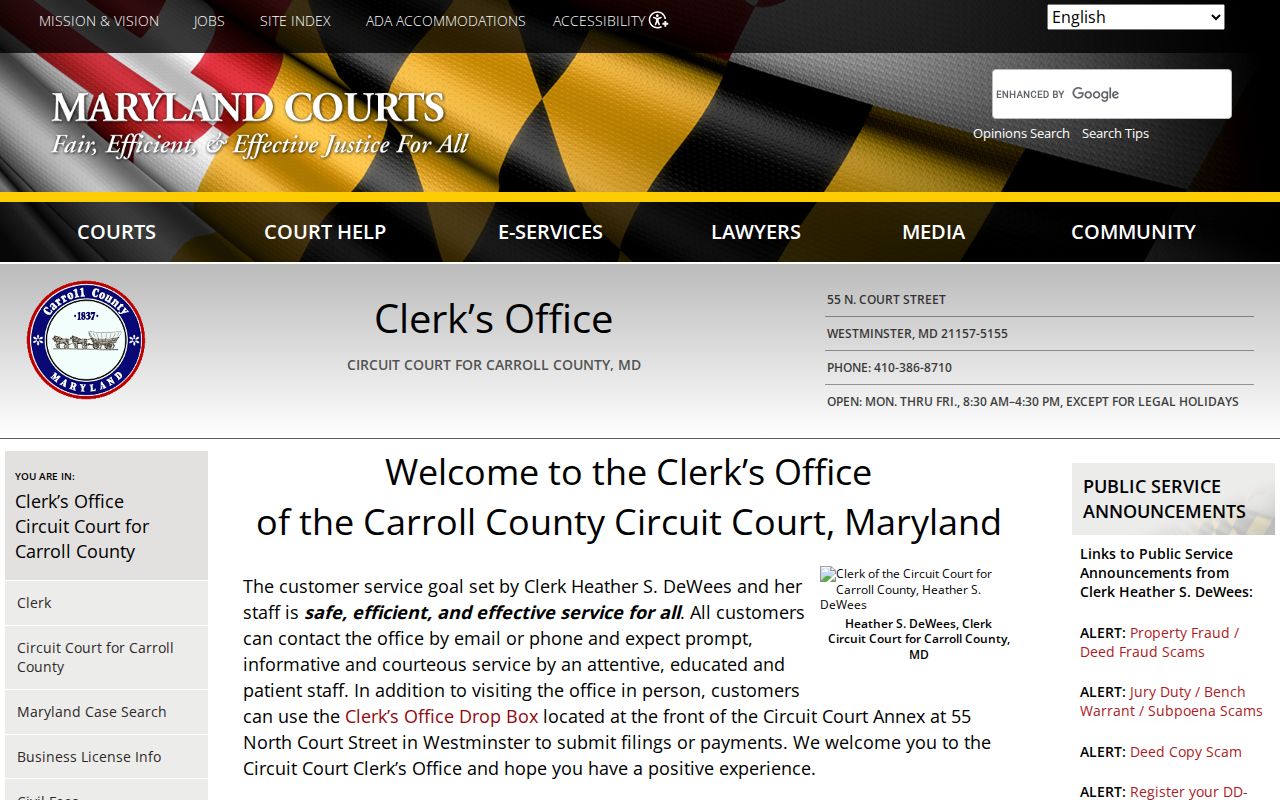
The court source directs readers to the legal file. Physical release still must be confirmed with the Sheriff, CCDC, DPSCS, or another receiving custodian.
Carroll Court Holding Transfers
The Sheriff’s law-enforcement description identifies Court Security as the unit that transports prisoners between correctional facilities and courthouse holding areas. That operational role explains why the holding rooms do not have their own inmate-search system. Custody remains tied to the sending and receiving authority.
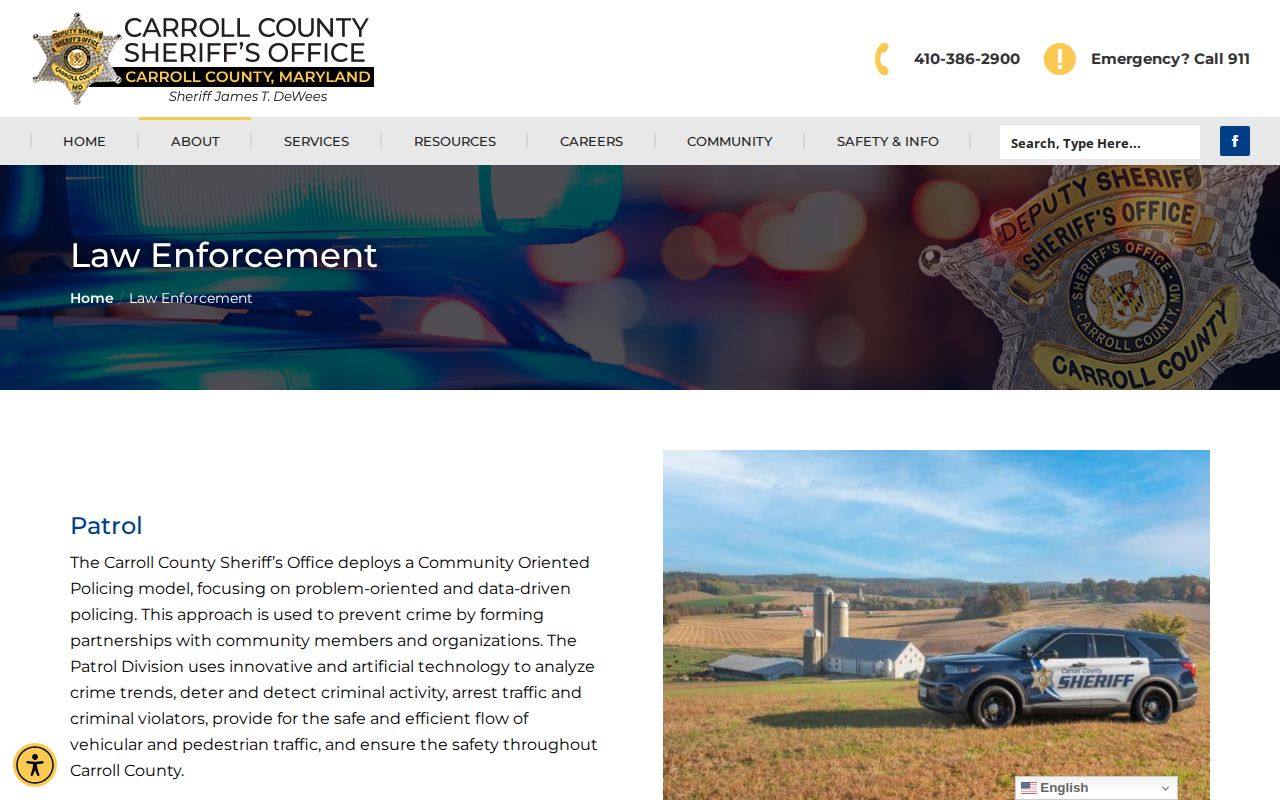
The Sheriff source supports the transport chain. It does not establish that every person who leaves a courthouse holding room was released to the community.
A warrant or detainer from another Maryland county, another state, the U.S. Marshals Service, or ICE can redirect the person. A detainer is a request or hold from another authority. The local departure ends one location’s physical custody but may begin or continue another agency’s custody.
For a return to CCDC, call the Detention Center at 410-386-2628 and ask for Inmate Records. For a state prisoner, use the DPSCS current locator and historical records office. A federal sentence calls for the BOP locator. ICE custody calls for its Online Detainee Locator System. No federal prison or ICE detention center was identified in Carroll County.
Carroll Jail History Near Court
The court holding areas must not be confused with Carroll County’s jail buildings. The Sheriff’s history explains that the 1837 Historic Jail near the downtown court campus now serves administrative uses. The operating Carroll County Detention Center was built beside it in 1971 and later expanded. A person temporarily held for court is not housed in the historic jail as a separate detention population.
A fiscal year 2027 Carroll capital document describes a planned 82,000-square-foot, 300-bed replacement for the county detention center. The replacement is not an operating facility until an official opening announcement says otherwise. It is also not a replacement for the District Court or Circuit Court holding function.
The distinction is practical. CCDC currently uses 100 North Court Street, District Court is at 101 North Court Street, and the Circuit Clerk is at 55 North Court Street. Their proximity does not merge their records. The court explains authority, the Sheriff or correctional agency records movement, and each office should be asked only for the material it maintains.
Note: Recheck court transport and records routing if the planned county jail opens, but do not treat the project as operational now.
Carroll Court Holding Record Limits
A court holding area does not produce an independent public release database. The docket may show a release order, bond action, sentence, dismissal, or remand. It cannot by itself certify the time the Sheriff completed processing or the destination after a transfer.
- Release order
- The judge’s direction that authorizes release under stated terms.
- Remand
- An order returning or keeping a person in custody.
- Transport
- A physical movement between court and a jail, prison, or receiving authority.
- Detainer
- A hold or request from another authority that may prevent community release.
- Physical release
- The completed custodial event recorded by the responsible jail, prison, or transport agency.
Maryland court access rules, sealing, and expungement can limit public display. Custodial records can also contain protected data. When a record is unavailable, request the specific order or movement field and ask the custodian for the legal basis for withholding and all nonexempt portions.
The clearest final statement names both sources: the court ordered a result, and the custodian recorded a movement. If only one source is available, describe only what it proves. That care prevents a courthouse appearance, return trip, or agency handoff from being mislabeled as release.